Fifty Years of Fighting for the Wilderness
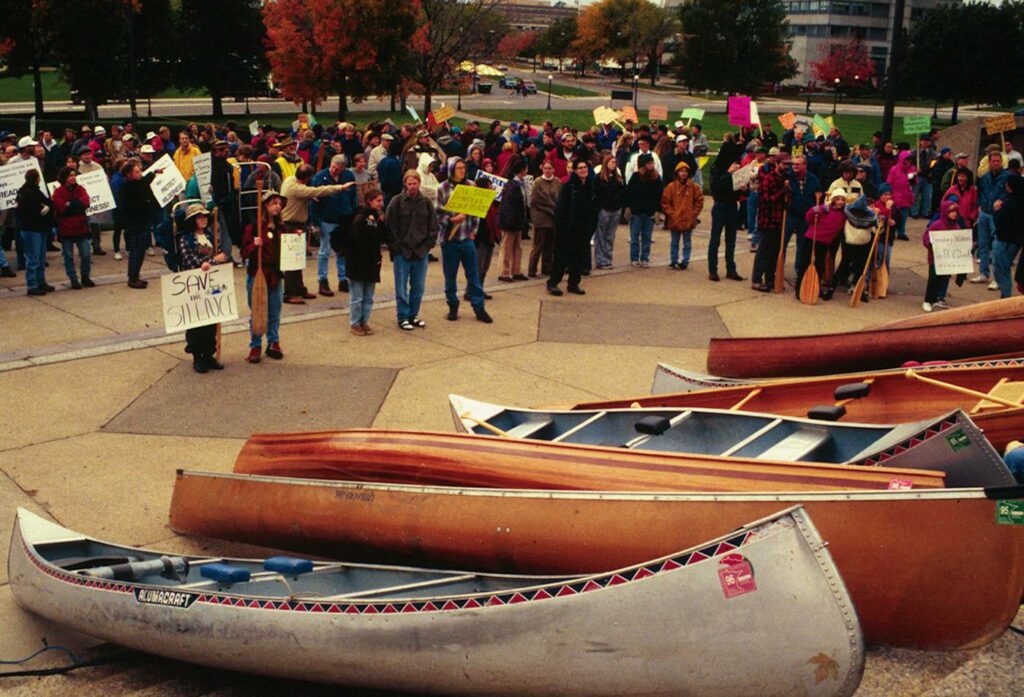
2026 marks the 50th anniversary of Friends of the Boundary Waters Wilderness. Our organization began in 1976, when a group of ordinary people came together to defend the area they loved, and to fight to make the Boundary Waters the protected wilderness it is today. What they created wasn’t just an organization—it was a movement that would secure one of the most significant wilderness protections in American history.
The Boundary Waters has always been controversial precisely because it is rich in both natural beauty and natural resources. Fur traders trapped beavers to near extinction. Iron mining gouged the land. Logging reduced vast forests to stubble. Industrialists sought to dam its rivers. This tension between preservation and profit has made the Boundary Waters the most continually controversial land in the United States.
Since the first years of the twentieth century, a patchwork of incremental laws provided imperfect protection for the Boundary Waters. Despite inclusion in the 1964 Wilderness Act, the Boundary Waters was managed as a wilderness in name only. Special provisions allowed motor use, timber harvesting, even mining. Little by little, the old growth forests and wilderness character were being chipped away.
Then came the crisis that changed everything.
In 1976, Congressman Jim Oberstar introduced a bill that would open half the Boundary Waters to logging, motors, and mining. This horrified conservationists and galvanized them into action. It was in this moment that Friends of the Boundary Waters Wilderness was born.
What followed was a two-year political struggle that at times seemed impossible to win. Some quit their jobs to work full-time for wilderness protection. Others made countless trips to Washington, D.C. The fight turned bitter—at a field hearing in Ely, effigies of conservationists were hung from logging trucks.
After tense negotiations, a compromise emerged that allowed limited motorized use on select lakes but granted full wilderness protection to over a million acres. This became the bill that, on October 21, 1978, President Jimmy Carter signed into law.
That 1978 victory wasn’t the first fight for this place, and it wasn’t the last. As we mark our 50th anniversary, we face a sobering truth: all victories are temporary, but all defeats are permanent.
Today, foreign mining companies seek to extract copper and nickel from the Boundary Waters watershed. The Trump administration has moved to lift mining protections, threatening some of the most pristine water in the country.
As we embark on the next chapter of this story, we’ve learned from our victories. We know how to organize, how to win in court, how to turn public support into political power.
The Boundary Waters needs friends more than ever. And we are ready.
Continue Reading

Building a Plan for Climate Resilience in Northeastern Minnesota
Climate change doesn't stop at the wilderness boundary. See how Friends of the Boundary Waters is fighting back with science-based…
Minnesota Has the Power to Stop Twin Metals – Here’s How
Minnesota has a clear legal pathway to stop the Twin Metals mine by canceling its lease - but we need…

Winners of the 2025 Boundary Waters Photo Contest
Discover the winners of the 2025 Boundary Waters Photo Contest, showcasing paddling, wildlife, landscapes, and special moments captured across the…