Twin Metals
When people join together, we can accomplish great things. We’ve proven that by beating back Twin Metals, the Chilean-owned mining conglomerates seeking to pollute the Boundary Waters. But despite our victories, this powerful mining conglomerate continues to threaten the Boundary Waters.
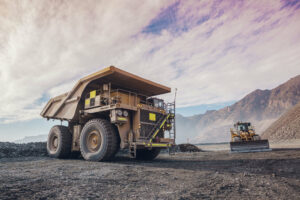
THE Boundary Waters Canoe Area Wilderness is under attack
The Trump administration and its allies in Congress have handed some 225,000 acres of protected public land, that is land that belongs to you and land that belongs to every American, to a foreign mining company backed by a Chilean billionaire.
The goal is simple: profit.
The consequence of their actions could be permanent destruction of the most visited Wilderness in the United States.
H.J. RES. 140 IS Now Law
The House passed H.J. Res. 140 in January. The Senate passed it 50–49 in April. The president signed it days later.
With that signature, the 20-year mining ban protecting 225,504 acres of the Superior National Forest was erased. The resolution used the Congressional Review Act in a cynical and dubious way. It discarded the Forest Service’s two-year environmental study, ignoring 675,000 public comments, and tossing aside science and democratic process in favor of a novel legal theory.
The threat is no longer hypothetical. Federal mineral leases near the Boundary Waters are now back in play. Twin Metals is expected to move quickly to reclaim its expired leases. Worse, under the CRA, no future president may be able to implement similar protection. That door to protection may be closed permanently.
MINNESOTA STILL HAS A MOVE — BUT THE CLOCK IS RUNNING
Washington does not get the last word. Roughly 36% of Twin Metals’ proposed ore reserves sit on state land, and Minnesota controls those leases.
Under the plain terms of Twin Metals’ 1990 state mineral lease, the DNR has the authority to cancel one of those leases this year. After 35 years, the company has not met the requirements to develop a mine, and has not paid the state any royalties in a single calendar year. Because it has defaulted on its lease, Minnesota DNR can cancel this lease.
Canceling this lease will not stop the mine. But it will set a precedent to cancel other state leases when they come due in upcoming years.
This will also be a signal that Minnesota will not simply hand over its treasured land.
That window closes at the end of 2026. Governor Walz can act. So far, he hasn’t.
WHAT IS TWIN METALS?
Twin Metals is a subsidiary of Antofagasta, a Chilean mining conglomerate controlled by billionaire Andrónico Luksic. For years, the company has been pursuing plans to build a copper-sulfide mine on the shore of Birch Lake, just miles from the Boundary Waters.
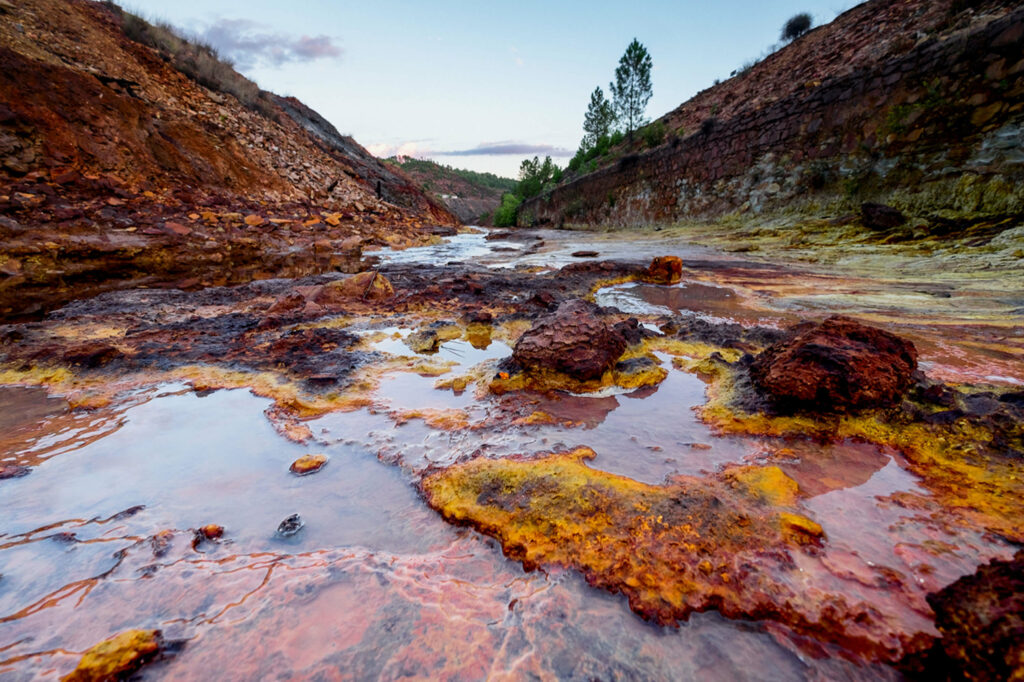
Copper-sulfide mining has a 100% track record of polluting water. It’s so toxic that the EP has listed it as the most polluting industry in the country. There is no example of this type of mine operating without contaminating the surrounding watershed.
Think for a moment. This would be the most polluting industry in the country operating next to some of the cleanest water in the country.
The Boundary Waters is an interconnected system of more than a thousand lakes, rivers, and streams. If pollution enters one part, it would make its way through the entire 1.1-million-acre wilderness and into Quetico Provincial Park and Voyageurs National Park.
This isn’t about American jobs or national security. Twin Metals be a highly automated operation offering few jobs for local workers. And the minerals it extracts would be shipped overseas for processing.
This is about a foreign corporation exploiting American public land for private gain and leaving Americans with the toxic consequences.
THE TRUMP ADMINISTRATION IS EMBOLDENED
With Trump back in office, the assault on the Boundary Waters has resumed — and this time, the administration has willing accomplices in Congress.
Representative Pete Stauber has been all too eager to sell out the Boundary Waters to billionaires and foreign interests. His introduction of H.J. Res. 140 is a radical attempt to strip away the protections Americans fought for over a decade to secure. And the administration that buried scientific research during its first term is once again putting foreign mining profits ahead of American public lands.
This isn’t about putting America first. It’s about putting a Chilean mining company first — at the expense of the people and places that make this country worth fighting for.
This is not a rehearsal. The threat is real.
We have our work cut out for us. We know the stakes and we know that when it comes to the Boundary Waters, victories are temporary. Defeats are permanent.
But as long as people paddle these waters and fall in love with this place, there will be people to protect the Boundary Waters.
Speak Up for Clean Water
Friends of the Boundary Waters Wilderness has introduced a Prove It First bill into the Minnesota legislature. If signed into law, it would stop Twin Metals and other dangerous mines from polluting our water.
This common-sense piece of legislation is simple. Before a copper-sulfide mine could be permitted in Minnesota, there must be independent proof that a similar mine has operated for at least ten years without causing pollution and that a mine has been closed for at least ten years without causing pollution.
Learn more about the mining proposals

Twin Metals
The victory over Twin Metals’ copper-sulfide mine, which could have contaminated over two million acres of pristine water throughout the BWCA, Quetico and Voyageurs National Park, is an incredible story, and helps us understand the challenges ahead.

PolyMet
PolyMet is the snowplow leading to other copper-sulfide mines near the BWCA. Though we have won astonishing victories against this dangerous project, the fight for environmental justice is far from over.

Teck’s Mega Mine
The most recent threat to emerge, the proposed joint venture between Teck and PolyMet would impact two watersheds and potentially pollute both the Boundary Waters and Lake Superior. Learn more about what we are doing to stop this dangerous project.
