Finding Solitude and Self on a Solo Canoe Trip
Miguel Garcia-Gosalvez grew up in Alicante, along the dry coast of southeastern Spain. It’s a landscape of warm rock and scrubby hills, closer to Arizona than to anything you’d call lake country. He hiked in the mountains as a boy, often alone, and was at home in open space. But he had never sat in a canoe until he was in his forties, long after he’d moved to the U.S.
A chemistry professor friend at the University of Wisconsin-Madison, where Garcia-Gosalvez lived and worked, talked him into a trip to the Boundary Waters. Over several days, they paddled hard through a string of lakes and portages and covered more miles, and more wilderness, than Garcia-Gosalvez had seen in his life.
What his friend complained about was that his paddling partner wouldn’t stop being quiet.
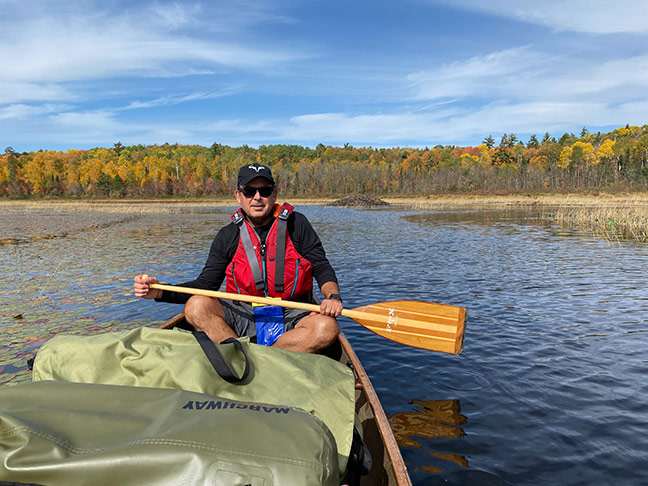
“He used to tell me, ‘Talk to me,'” Garcia-Gosalvez recalls with a laugh. “I was just paddling, completely into the rhythm of it, fascinated by the landscape. I was doing mindfulness without knowing that’s what I was doing.”
After that very first trip, he had seen enough to know he needed to return. By the following May, he was back. This time he came alone.
Since then, Garcia-Gosalvez has returned to the Boundary Waters multiple times a year, almost always solo. He often crosses into the wilderness northwest of Ely, where the entry points thin out and the country gets quieter the further you drive.
His daily rhythm is simple. He paddles most of the morning, eats something light while moving, and by two or three in the afternoon finds camp and stops. He sets up his tent or hammock, makes coffee, gathers firewood then does something he almost never permits himself at home: nothing.
“I can spend two hours just sitting there looking at the water,” he says. “Looking at the sunset, the horizon, the clouds, the birds. I like holding the coffee mug in both hands and feeling that warmth while the cold air is on my face. I find peace in that.”
Back home, Garcia-Gosalvez works in the Division of Information Technology for the University of Wisconsin-Madison. For someone whose working life runs on meetings, deadlines, and a relentless pressure to produce, that kind of stillness is not easy to come by. It takes time.
Garcia-Gosalvez has come to think of a solo trip as something that unfolds in stages, layers you need to push through to reach a place where you can settle into the solitude..
The first day is hard. There is anxiety, restlessness, a persistent sense that you should be doing something. The first night, sleep rarely comes easily.The body is in the wilderness but the mind is still at work on whatever was left unfinished at home. “My body is already out there,” he says. “My mind takes longer.”
By the second or third day, something shifts. The senses come alive in ways that daily life has suppressed. He finds himself aware of which direction the wind is coming from, the exact quality of light in the early morning, the way various birds move differently through the same air.
Once he reaches day three, four or five, Garcia-Gosalvez crosses into what he describes as a deeper phase, as emotions that daily life keeps buried start to surface. His parents are both gone now. So sometimes, he grieves.
“I feel a little uncomfortable saying it,” he admits. “But when I’m alone for a few days, I feel like they’re closer. And when I come back, I appreciate my family more – my kids, my wife. I listen more. I’m more present. I’m a better person for a while.”
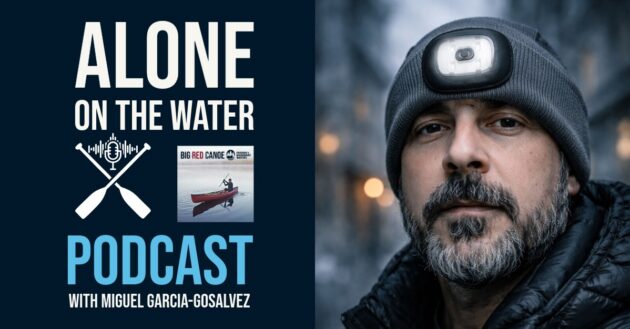
Listen to Miguel in his own words
An extensive interview where Garcia-Gosalvez describes his inner journey into the Boundary Waters solo paddling.
Miguel grew up in a Spain that was still emerging from decades of dictatorship under the Franco regime. Both of his grandfathers had fought on the Republican side of the Civil War, the side that lost. And his family paid for it. His grandfather spent years in prison. His father was denied access to secondary school because of his grandfather’s politics.
Because of this, Garcia-Gosalvez was the first in his family to finish high school, and the first to attend university. At eighteen, he moved from Alicante to Barcelona to pursue his studies. Here, he met his wife, Suzanne, an American. They lived in Spain for a while, then moved to Washington, D.C., where he worked for years in intelligence and defense. Then Madison, where they raised their children.
Since moving to the United States thirty years ago, he only saw his parents on occasional visits, a few times a year.
“I spent thirty years away,” he says quietly. “And when I’m alone out there, in the silence — I feel like I can talk to them. I know it sounds strange. But it doesn’t feel strange when I’m there.”
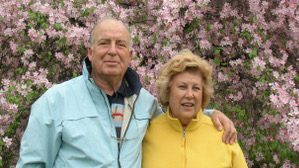
Garcia-Gosalvez’s parents, who have since passed away in 2022 and 2023
The Boundary Waters has a way of making space for things we ordinarily don’t have time for. For Miguel, that included his own thoughts. Those solo trips took him somewhere unexpected. And curious about why, he dug into the science of solitude. What he found confirmed what he’d already been experiencing.
Studies have found significant reductions in cortisol and anxiety among people who spend time alone in natural environments, along with improvements in sleep quality and measurable increases in positive emotion. The mechanisms are multiple and include digital disconnection, the restorative effect of natural light and sound, and what researchers call “soft fascination” — the gentle, effortless attention that nature commands without demanding anything in return.
“I kind of learned all of this after the fact,” he says. “I was going through these phases but didn’t know how to put words to how I was feeling. Reading about them helped me understand that I wasn’t crazy — and that I wasn’t alone in feeling this way.”
“When I go back,” he says, “the world is exactly the same. But I’m not.”
There is a moment Garcia-Gosalvez describes that comes somewhere in the middle of a longer trip, when the noise has quieted, the phases have passed, and what remains is something he struggles to name.
It is not confidence, exactly. It is closer to what he calls self-trust.
In modern life, he argues, that muscle atrophies. We outsource decisions, defer to protocols, avoid real stakes. The wilderness does not allow this. Multiple times a day on a solo trip, you face situations that have immediate consequences. Should I launch in these conditions? Should I push for one more mile or stop here? Is that weather moving toward me?
Garcia-Gosalvez has come to believe that working that muscle, even for only a few days a year,is one of the most valuable things he does.
After years of double-portaging early solo trips, Garcia-Gosalvez has learned to travel light. Dry foods, oatmeal, coffee, tortillas, jerky, manchego cheese that keeps without refrigeration. He brings food for his planned days plus one extra, in case weather holds him.
“I feel less hungry out there than I do at home,” he says, “even while paddling hard. I think I’m being fed in other ways.”
He carries a Garmin InReach satellite communicator on every trip. At the end of each day on the water, he sends a short, 140-character text so his family knows where he is. Sometimes he checks the weather, but nothing else.
He leaves his routes flexible. He plans, but he doesn’t lock in. If he’s tired, he does less. If the weather is bad, he stays. Pleading and hoping has only taught him that the wilderness does not negotiate. The paddler who learns this fact is richly rewarded
“It has a special place in my heart. Whatever we can do to protect it — it’s not enough.”
Miguel Garcia-Gosalvez
Growing up in Spain gives Garcia-Gosalvez a perspective on the Boundary Waters that most of us don’t have. There is nothing in Europe that compares to the lakes and interconnected waterways of one million acres of undeveloped wilderness. The density of population is higher there, and protected spaces are much different. In many parts of Europe, protection means you simply cannot enter.
When he learned about legislation that repealed a 20-year moratorium and reopened the door to potential copper-sulfide mining in the watershed, he felt it personally.
“Just knowing that place exists, exactly as it is, is worth protecting,” he says. “The idea of doing clean copper-sulfide mining is a fiction. It doesn’t exist. Once you alter the water, you lose everything.”
He pauses. “It has a special place in my heart. Whatever we can do to protect it — it’s not enough.”
What he keeps going back for is the particular quality of attention that solitude makes possible. The birds approach. The light has weight. The paddle enters the water and makes a clear sound.
After a few days, he stops missing anything else.
There is nothing else to do but notice.
Listen to the extended audio interview with Miguel Garcia-Gosalvez on our Big Red Canoe Podcast, for more observations on solo camping. And read his reflections on solo canoeing at mycanoelife.com.
Continue Reading
Announcing the Friends’ 2026 Photo Contest
Got a great shot from the Boundary Waters? Enter our annual photo contest for a chance to win one of…
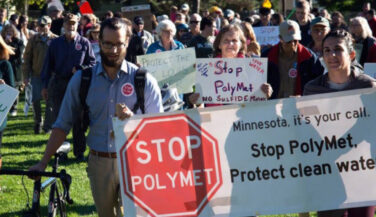
Tell the Army Corps to Reject NewRange-Polymet Wetlands Permit
Voice your concerns about the NewRange-Polymet wetlands permit in Minnesota, and protect the environment from polluting projects.

The Roadless Rule and the Boundary Waters: What's at Stake
The federal government wants to rescind the Roadless Rule, stripping protections from 45 million acres of national forest — including…