Podcast: Ordinary People, Extraordinary Wilderness
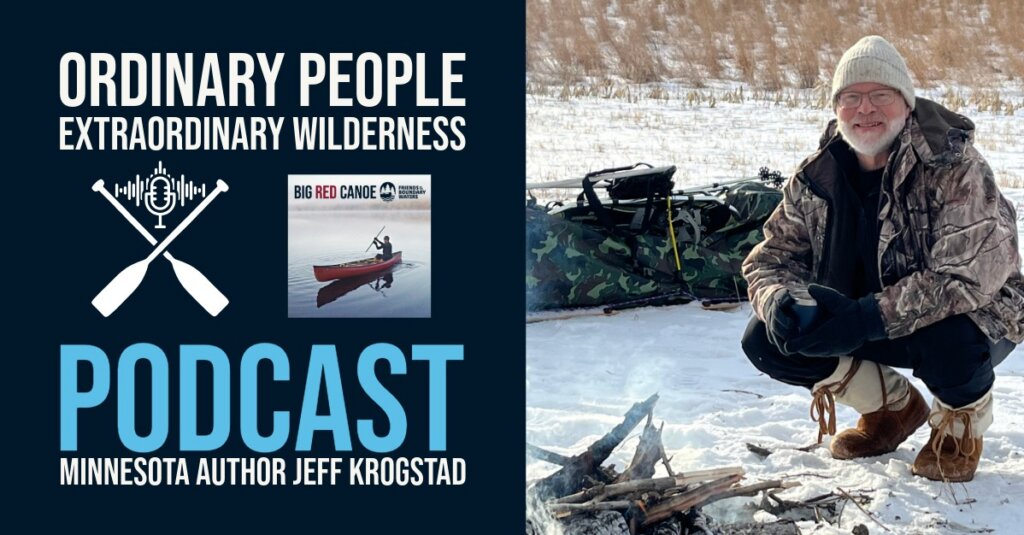
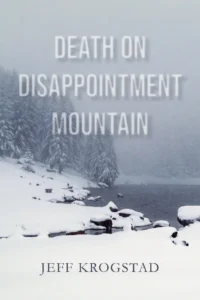
Winter in the Boundary Waters is unforgiving—and that’s exactly why Minnesota author Jeff Krogstad set his thriller Disappointment Mountain there.
Jeff joins us to talk about writing wilderness fiction, the creative parallels between surviving in the backcountry and navigating life’s challenges, and what the frozen north reveals about human resilience.
Plus: Jeff’s winter trip (on Substack), real bear encounters, the art of making fiction believable, and why the Boundary Waters transforms everyone who enters it.
Transcript
Jeff Krogstad: Sometimes the Boundary Waters is really hard to write about. It’s just overwhelming. How do you even begin? But I think getting into the sensory details, the feel of your paddle hitting a rock those details are the sensory things that you bring back later and say, “how do I capture this moment?”
Intro: Welcome to Big Red Canoe, the podcast from Friends of the Boundary Waters Wilderness, where we introduce you to captivating people and intriguing stories from America’s Treasured Wilderness. I’m Dave Meier. Grab a paddle and hop on in.
Dave Meier: .Welcome to the Friends of the Boundary Waters podcast. Today we’re exploring the Boundary Waters, not just as a place, but as a character, force that shapes challenges and transforms the people who enter it. Our guest is Minnesota author Jeff Krogstad, whose thriller Disappointment Mountain sends a woman fleeing into the frozen wilderness in search of truth. We’ll talk about writing winter wilderness survival, and what happens when ordinary people face extraordinary challenges. In one of America’s most unforgiving landscapes. Jeff, welcome to the podcast.
Jeff Krogstad: Thanks, Dave. Great to be with you.
Dave Meier: Where are you from and who introduced you to the Boundary Waters Wilderness?
Jeff Krogstad: So I grew up in northwestern Minnesota about the same latitude as the boundary waters on a small farm there. And grew up in a hunting family and outdoors family, and loved being out in the woods. When I was about 14, my mom came up with the crazy idea that our church youth group should go to the boundary waters.
She had never been, and she wasn’t going on the trip, but she organized the whole thing and did an amazing job with a couple of caveats. Like we didn’t know to put our place or sleeping bags in plastic liners, things like that. So every teaspoon of water that came off our paddles. Soaked our sleeping bags and our blue jeans, and we didn’t know not to wear cotton.
We had way too many leaders on the trip who knew they were in charge, and we went Memorial day weekends. So we got snow and rain and wind and all kinds of good things. It was the most miserable trip without exception that I’ve ever done in the boundary waters, and yet I was absolutely hooked. I just couldn’t get enough of it and kept going back.
Dave Meier: Even the bad ones they stick with you and you can hopefully go from there and have a better ones. Do you have a favorite memory? A trip that went better?
Jeff Krogstad: Oh my goodness. So many. And a lot on those same lakes, going in and having the great memories. But one I was thinking about just not too long ago is my wife and I went in, this is I think two and a half years ago. And we were south of Cross Bay Lake going on a little lake that has no name on the maps.
Thereabout, 75 yards ahead of us came to Bull Moose. Now this is mid-September and the moose were in the rut. And so we knew this was a fairly serious thing to see these bull moose right there and that close. And we just drifted a little bit and sat still. And got to watch ’em swim across the lake and climb up and shake the water off, in the middle of a cedar tree.
It was one of the most gorgeous things I’ve ever seen. And the combination of the beauty and the awe of these majestic animals and then the little bit of the adrenaline from the danger it was just a great moment. And there’s so many of those. When you think back.
Dave Meier: I appreciate how you have, endeavored to write a book about the Boundary Waters or, with the Boundary Waters as a character, because I feel that, sometimes it’s hard to capture the Boundary Waters adequately.
I mean, It just seems huge. Beautiful, wonderful. There’s so many words to describe it. And and yet sometimes when I’ve, taken a photo of the most brilliant sunset I feel like it, you look at it later and it just doesn’t even capture a portion of what you saw and felt at that time.
And so I feel like it’s a challenge. I wanna talk to you about that a little bit today. What inspired you to write about the Boundary water specifically?
Jeff Krogstad: The sages always say, write what you know. Writing what I know and what I love was an easy one. I’ve spent so many days in the Boundary Waters and I love to imagine being there when I’m not there, so it came naturally. I’m a storyteller by nature and it came naturally to want to craft a bigger story that involved the Boundary Waters in a significant way.
Dave Meier: One thing that struck me about your book too was that it’s set in the wintertime, which we’re in right now. And so have you ever been to the Boundary Waters in winter?
Jeff Krogstad: Not yet. Got that coming up really soon, I hope. But I’ve done a lot of winter outdoor stuff in Northern Minnesota. Like I said, grew up in a hunting family. I’m an avid bow hunter, and so sitting in a tree when it’s 10 below and waiting for the deer to come by that’s good fun in my book.
So having the right gear and having the right time and being able to go out And enjoy that. We’ve, we’re planning on a trip into the Boundary Waters in the winter, and I think we’ll talk more about that, but I’m very excited about that.
Dave Meier: Yeah te tell me about it right now. What have you got planned? What are you what are you endeavoring? Are you going with a group of people? Are you going solo?
Jeff Krogstad: So two and a half years ago, I came out with this book, death on Disappointment Mountain, and a few friends that we’ve been to the Boundary Waters many times. They said, Hey, let’s go up there. Let’s climb Disappointment Mountain. Let’s. Go up there and see this place that you described in the book.
So we canoed in and it was midsummer just a great trip, enjoyed the beauty and the summer trip and relaxing together and swimming in the water off the island where we were camped, things like that on Disappointment Lake. And we climbed up Disappointment Mountain and the conversation on that trip.
Kept returning to Yeah. But they were here in the book during the winter. We should come in the winter. And a couple of the guys in our trip in our group had done some winter camping and we thought, why not? It’d be great fun. So we’ve been planning now for three years and each year we planned around the schedule of a couple of the younger guys in the group that had spring break in mid to late March.
Winter hasn’t really happened. For the last couple years. And so by late March, it was almost spring and the lakes were starting to get slushy and just didn’t work out. So this year we plan to go a little earlier that way if the weather doesn’t cooperate, we can bump the trip a week or two or three and still have some leeway.
In the meantime, we’ve been discovering the joy of preparation . You have fun prepping your food, you plan your trip, you look at your itinerary, you look at your route, which portages are gonna be the hardest. So in the winter, that just ratchets up.
I like to think that winter is extreme. Like every other season in Minnesota is extreme, only more so. and so winter is more uncomfortable, it’s more beautiful, it’s more majestic, it’s more magical. It’s more than all these other things. And the preparation is more too. So we’ve been building toboggans from scratch.
Jeff Krogstad: One of the guys owns a woodworking shop, and we have. Been prepping our food and thinking about our route and we had a get together not too long ago where we did a trial run and slept outside to see how our bed rolls would hold up.
It got to about 10 below that night. So we figured it was a pretty good test.
Dave Meier: There’s a lot of stake if you’re up there in the winter. You know? I mean, if you don’t get it right, you’re gonna be cold, wet. Maybe falling through ice, all kinds of things.
Jeff Krogstad: There’s a lot of people who do hot tents these days and more power to ’em that gets more people to experience the Boundary Waters in the winter. That’s not really our agenda. We are going without a tent at all and sleeping under the stars. We’ll have canvases.
Tarps and things like that if need be, just in case we need a shelter of some kind. But we’re planning on being able to wake up in the middle of the night and see the stars overhead. That test run that we did. One of the guys woke up at 1230 and he said, I sat there and I watched the deer on the ridge.
We were at my place on my land. And he said, I watched the deer walking by in the moonlight, and it was the most. Crazy thing just to lay there in my bed and see these deer going by. So we’re doing it a little more like people did a thousand years ago when they were camping in the Boundary Waters.
Dave Meier: so you’re just. There in the snow, like you out little uh, divot in the snow or something like that.
Jeff Krogstad: We have a tarp. Then on top of the tarp there are two closed cell phone pads.
Then on top of that, you put a sleeping bag, and inside that sleeping bag, you put another closed cell phone pad, and then your cold bag your good sleeping bag goes inside of that. And then you pretty much are this human burrito out there in the snow. And if you wake up in the morning and there’s ice forming under you, you know you need more padding.
Dave Meier: Okay, and were you warm enough during the test run? I’m just curious.
Jeff Krogstad: Yeah, we all survived just fine during the night and slept well. Woke up in the morning and everybody was excited. Getting outta your bed at that temperature is a little challenging, but we did fine. It was great.
Dave Meier: I’m interested to hear how it goes, and I hope it goes well. And I’ll be interested to hear too how disappointment Mountain comes into it a little bit. Your book opens with devastating news that sends one of the characters Kim Norby into the wilderness in the winter, as we discussed and for listeners who haven’t read it yet, give us the setup, like, why the Boundary Waters and why winter?
What spoke to you about that?
Jeff Krogstad: The first guy you meet in the book is a guy named Mac, and Mac is a little bit antisocial. He is a curmudgeon is an executive type that looks for every chance he has to get away and he’s gone away into the Boundary Waters and you meet him on the first page and it’s. Death. That is the death on Disappointment mountain.
The circumstances around his death and how it unfolds. That’s the question that’s the mystery in the book. And his executive assistant is Kim Norby, and she gets news from a strange man that she’s never met who brings her a manila envelope that’s been sealed, has Mac’s handwriting on the outside of it with her name.
And he says, I’m sorry to tell you, Mac has. Is dead. He died up in the Boundary Waters a few days ago. And then Kim has to unravel what’s going on? How is this man involved? What’s the truth here? And she ends up going into the Boundary. Waters still in that winter to try to discover what’s actually happened.
I don’t wanna give away too much of the story, but that’s where it starts.
Dave Meier: And she had some experience in the Boundary Waters, but there was a rediscovery for her as well.
Jeff Krogstad: Yeah, Kim is like so many people that I’ve met that fell in love with the Boundary Waters in college. And she and a friend worked at one of the Outfitters on the Gun Flint Trail in the story back when they were in college and she. Reconnects with that friend and they go in together to investigate Max’s death.
I’ve known a lot of people who have that experience and they’re like, oh, I remember those days. It was so great. I love the Boundary Waters say. How long has it been since you’ve been back? Oh, it’s been 20 years. I’ve never been back. It’s like, why haven’t you gone back? And Kim has fallen into that trap.
She’s gone the executive route and she’s working for a nonprofit. She’s doing the, do gooder in the world kind of thing and doing important work. But she’s lost that part of herself that’s so much tied to the Boundary Waters and so much loves the wilderness and she really rediscovers herself.
In the course of the story through reconnecting with her friend Misty, and through them going back into the Boundary Waters and the Boundary Waters continue to play this growing role in her life as she reconnects with it and starts to bring back some of those memories.
Dave Meier: and those things happen to us. I mean, I know in our family we’ve had a few breaks from the Boundary Waters over the years, having kids and things like that. And it’s not always possible to get up there. But then it’s great when. You can circle back and because it is an extraordinary place and you’ve said that, you love writing about ordinary people having extraordinary adventures the Boundary Waters, like how does it have that effect on people?
Jeff Krogstad: The Boundary Waters is such a unique, beautiful place for exactly that reason. I think, Dave it’s accessible. Sometimes I think it’s maybe too accessible that you can drive up there from the Twin Cities or from anywhere else and you can drive in and rent a canoe, get a couple of packs of food and go in and it almost feels like going to a park now.
It’s not a park, it’s a wilderness area, and it’s fully as dangerous as any wilderness area. You used the word unforgiving earlier and I think the Boundary Waters can be really unforgiving. But it allows ordinary people to get into the wilderness in a way that can truly be life changing. It’s this amazing transformative place.
Dave Meier: I think it does it does play into your book, it kind of puts people, On edge a little bit. There’s an edginess, there’s a personal exploration aspect to it. What genre would you call a disappointment mountain?
Jeff Krogstad: Yeah, that’s a challenge. I like the word wilderness adventure. If I was gonna get technical about it, I was an English major in college, so I would probably say literary fiction, but Wilderness Adventure sums up most of what it’s trying to do. Yeah, it’s not quite mystery, it’s not quite thriller.
Dave Meier: I read it last year when I was heading up into the Boundary Waters. and so I enjoyed being in my hammock in the summer, not in the winter, and enjoying the book.
And then I was on Disappointment Lake and I was right by Disappointment Mountain. And so I was
Jeff Krogstad: I love that.
Dave Meier: I loved that too. But I kept going around the corner on Disappointment Lakes saying like, where’s the mountain? Where’s the mountain? I can see this on the topo map, but is it that hill over there?
I think
Jeff Krogstad: Right.
Dave Meier: And so I guess the joke being that the disappointment was that not really a mountain
Jeff Krogstad: And if you’re gonna write about mountains in Minnesota you pretty much have to take what you can get. in Colorado it wouldn’t count for much, but I think it’s a little over 300 feet from the lake up to the top of mountain. Disappointment mountain and that’s not much by Colorado standards.
Now geologically, I think there was a lot more going on there years ago, you take a few glaciers and a few million years and whatever else it’s worn down what used to be a pretty respectable mountain range by all accounts.
Dave Meier: True. And there are, there are some larger hills in Minnesota near Lake Superior But I was, I kept feeling like I was missing something and then I realized that no, that was it. have you hiked up there?
Jeff Krogstad: Yes, I have.
Dave Meier: Yeah. So did it look like a little bit more from on top? Could you see any distance?
Jeff Krogstad: You can see, you don’t get right up to the summit, and it’s really hard to find any kind of a vista from up on top, but there’s, it’s just tree covered. But it is it’s a good hike. You realize you’re climbing 300 feet when you get going upward. And so that’s a good challenge. As I’ve been preparing for this winter trip, there’s Sibley Park is not too far from where I live, and so I’ve gone there to hike up Mount Tom, which is a similar elevation gain, and that’s a good climb.
There’s some up and down to it, and my calves are. Screaming a little bit by the time I get there and get back down.
Dave Meier: So as you were writing the book, did you go to that area at all to inspire you or to get details right,
Jeff Krogstad: interesting. This is the first novel that I’ve written. I’ve written a few since, but, when the book idea first came to me, I was camped actually east of Disappointment Mountain over on Gaskin Lake and my daughters were younger and they were playing, picking raspberries and throwing ’em at squirrels and things like that.
And I was a little bored in camp and I was trying to imagine what what it would be like to be caught in the Boundary Waters during freeze up. What would that look like? And as I imagined that, I thought, okay, what’s that guy doing in the Boundary Waters? Why is he there? And that story of that guy getting caught in the Boundary Waters during freeze up kept coming back to me.
And so for years over probably 12 years, I would go back and many times I did go back through Disappointment Lake and I thought. I bet he’s in this area. He’s looking for disappointment Mountain for some reason. What’s the deal with that? Why is he there and who’s he meeting? What’s going on?
And the story just took place. I had no urgency, no need to finish the book, but like I said, I’m a storyteller and so I was imagining this in my mind and I’d make notes. And in the off seasons when I wasn’t in the Boundary, waters, winters, I’d pull out my notebook and make a few sketches about what was going on.
And then one day I decided it’s time to finish this book. And I started working on the story and started imagining what had happened and really trying to put it all together and that, that got to be a labor of love, that over a period of several years finally became a novel.
Dave Meier: It sounds to me like the, that spot where you were in the Boundary Waters and picturing it turning into winter, maybe that even inspired the character of Mack because you said like he was the type of guy who would go up. There and seek that out. So is it possible that rather than Mac seeking out the Boundary Waters, the Boundary Waters kind of created Mac.
Jeff Krogstad: Absolutely. And I think that’s very much, very much the way that works and it works that way for us too. I think that, if you keep going back to the Boundary Waters, you find that there’s something new being shaped and birthed in you that you didn’t know was there before, or maybe you didn’t.
You didn’t have it at all before. It creates something in us and we’re indebted to it. I think the work that the Friends of the Boundary Waters does is so important precisely for that because we are indebted to this beautiful, magical, severe place.
Dave Meier: Yeah, that, half the time I’ll, intend to write when I’m going up to the Boundary Waters and I’ll leave with my notebook still in the Ziploc. But at other times I feel like it opens things up for me that. can’t come to me any place else.
That’s just like a different perspective. and I think that is important and that is why we need to continue to protect that place. So are, is there any other kind of creative inspiration that the Boundary Waters has given you?
Jeff Krogstad: Yes, it would be. Really hard to catalog that. Both fiction and nonfiction. I’ve written some nonfiction essays too I think, as a creative there, there’s a threefold process that we get ready for a trip, we go on the trip, Then we reflect on the trip.
We remember about the trip, and so that threefold process, I think works very different for me in each stage as a creative
preparing for the trip. I’m all about the trip right now. When I’m thinking about winter camping, I’m not writing stories about winter camping. I’m preparing gear. I’m looking at my toboggan saying, do I need to redo the harness on this thing?
Things like that. It’s very practical, very down to earth, because that’s part of what the Boundary Waters does for you. It teaches you, you have to pay attention to the details and then that leads into actually being there. I think the biggest gift that the Boundary Waters gives is it says, pay attention.
Pay attention right now. This is not, oh, I’m gonna think about this later. This is, you need to know. Are you sweating too much? Are you gonna get hypothermia or are you getting dehydrated? Do you need to get some sunscreen on? If you’re there in the summer and you’re starting to sunburn what’s happening, pay attention.
And that immediacy is such a gift because where else do we get that? We scroll Facebook because we don’t want to pay attention. We wanna escape. And that paying attention is what we’re called to in the moment, during the moment. And then for a creative, I think the post-trip reflection is where the creativity and the experience come together, because then you can start to pull out the details and you can start to say, okay what here is worth?
Writing about you said that sometimes the Boundary Waters is really hard to write about, and I totally agree. It’s just overwhelming. How do you describe, how do you even begin? But I think getting into the sensory details, the great of a canoe, hitting the gravel too hard as you come into the beach when you didn’t mean to.
Or the feel of your paddle hitting a rock or the smell of deet, as it starts to eat away at your raincoat. And how are you gonna cover your, the cuffs of your wrists, where the mosquitoes are getting in. Those details are the sensory things that you bring back later and you say, how do I capture this moment?
Dave Meier: I’ve come back from the Boundary Waters and written and sometimes it’s just a cataloging of what we did and what happened or what the kids did or something like that. It sounds like you’re going a little deeper into kind of here’s what this was like and trying to describe some of those feelings.
And then in your book do you, did you bring in some of those actual details from trips that you’ve been on?
Jeff Krogstad: I tried as much as I could to do that. Absolutely. And that’s one of the highest compliments I’ve gotten from people that enjoyed the book is they say it’s very much like I was going to the Boundary Waters myself. The sensory detail and the actual feel of. Of being there and the smell and the sensation and the sound I loved your last podcast when you had the gentleman on who was struggling with sight because he was pointing to some of that sensory detail, that was so fantastic.
Dave Meier: Yeah, that was such a great conversation. Kelly Carver
Jeff Krogstad: Yeah.
Dave Meier: Waters wilderness site. It was the last podcast I recorded, just thinking about the Boundary Waters through his eyes, brought me back there and made me see things in a little bit of a different way.
Jeff Krogstad: Exactly.
Dave Meier: That’s that’s something that I would hope that we can get from, the creative process and from reading and writing about the Boundary Waters, Sigurd Olson obviously
Jeff Krogstad: Wow.
Dave Meier: famous example of somebody who captured those details inside out those details and meet us think about those details.
Do you have any other favorite authors or people that you’ve read that have written about the Boundary Waters?
Jeff Krogstad: just because he writes so much about Minnesota, I enjoy William k Kruger, and I like a good mystery novel or thriller, as much as anybody. And William Paul Fogger does an amazing job and he has put out a, an amazing body of literature. I write differently about the Boundary Waters than he does, but I admire the way that he sets things up in that wilderness and writes so well about the people and the places.
Sigrid Olson you mentioned he was a formative writer. As I read him, I remember him writing about paddling into, saganaga from the West end and he came in not realizing that the gun Flint Road had been completed and pushed up to Saganaga and came around a bend and saw a bar with the beer lights on, the neon lights on in the window on the south end of the lake.
And he was just devastated by it. And I think both the. Sensory detail, but then also the heart and the love that he had for that wilderness come through so clearly in his writings.
Speaker: 50 years ago, a group of friends met at a diner and began to organize a movement. They called themselves friends of the Boundary Waters. Through grassroots organizing, they fought to make the Boundary Waters the protected wilderness. It is today. For 50 years, we’ve defended the Boundary Waters. Our strength is in our members.
It is in you. To learn more and join this movement, please visit www.friendsbwca.org.
Dave Meier: / There was one event in the book, disappointment Mountain that was a bear encounter. And I understand that was inspired by a real en encounter that you had. Was that near Disappointment Lake?
Jeff Krogstad: It was on Disappointment Lake on one particular campsite, actually a campsite that I used as a model for where Kim is camped at that moment. And she comes back down and this is in the summer. She’s back in the Boundary Waters. She comes back down off Disappointment Mountain and finds a bear in her camp and has to deal with that.
That same site that I used as the inspiration for that. Was the only place I’ve ever had a bear try to take my pack in all the days that I’ve been in the Boundary Waters. The way it happened was I was camped there with my family and we had a couple of dogs along, and about four in the morning the dogs just went ballistic and went running through the woods and I could hear there was something trying to drag our equipment pack off, and I got out of the tent and grabbed a canoe paddle and walked out.
Out of the woods and out into the open and saw that our equipment bag had been moved hadn’t been torn up or anything. And I had carefully stashed our food well away from camp and because there had been some sign that there was a trouble bear. And we had talked to the DNR and they’d warned us that there was a bear causing some trouble in that part of things.
And so we had prepared well and the bear never found our food pack. But then the dogs ran off into the woods following this bear, and then the bear circled back around. And so here I am just before sunrise in the morning, dim light, coming across the lake and I’m standing there with a canoe paddle and there at the edge of the trees comes this big old sow and looking at me like.
Hey, buddy. Your food pack is supposed to be here. That’s the deal. I want it. And I wasn’t quite sure how to handle that. I took a few steps toward her and made some threatening noises and waved the paddle. And she heard the dogs coming back then. And she took off into the woods. Trouble was then she proceeded to the next campsite up the lake and got into their food pack and tore everything apart.
And we talked to that party later when they were on their way out. And she had just absolutely shredded their food pack. And we heard them banging their pots and pans and they couldn’t drive her off for anything. I did hear that the DNR ended up dispatching that bear, sadly, later on in the fall.
And she got completely outta hand. It’s a tragedy when they get acclimated like that.
Dave Meier: Yeah, it is. It is. Did you hear them banging their pots and pans across
Jeff Krogstad: Yes.
Dave Meier: And
Jeff Krogstad: Or about a quarter mile.
Dave Meier: know what it was?
Jeff Krogstad: We had a pretty good idea. We knew the bear had headed off that direction and heard the pots and pans and heard a lot of yelling, and it was a classic, here’s what to do in a bear encounter. Just wasn’t effective in their situation.
Dave Meier: That scene stuck with me too because when we camped at Disappointment Lake I recognized that campsite because that is the campsite we had stayed at, it wasn’t the site we were looking to stay at, but it’s the one we ended up at. It was actually quite wonderful.
And it dawned on me like. That’s, this is the campsite that is in the book. I as I was reading it. I was just like, I know this and I was looking for details about the site are you going for realism or are you going sometimes.
For just like a broad understanding and then how do you make how do you balance that kind of realism with some action and things that keep the story moving along.
Jeff Krogstad: I try really hard to write what’s real as much as possible. The natural world is more diverse and more beautiful and more intricate than anything I could invent in my own head. And so I try to describe it as much as I can, which I don’t know, maybe that’s cheating, but I think if you can write it well, it’s just good writing.
So I absolutely wrote that Real campsite and Disappointment Mountain, writing that real place and trying to take the details that I know from being in the Boundary Waters and describe them. And then as a storyteller, you try to put action there that’s not just gonna put people to sleep.
And that’s the danger with writing ordinary people, is you’ve gotta get them into extraordinary situations. Because otherwise people are gonna say, you know what? My life is this boring. I’m gonna go wash my dishes. And so trying to say what happens here and why is it important writing some of the emotion.
That’s in those situations and trying to get inside not just people’s heads, but people’s hearts and say, why does this matter so much? That’s where I love inventing a story because you put people in difficult situations in the story and then they have to make these hard decisions. Because every one of us faces those.
Dave Meier: And did you ever have any kind of light coming from the heavens inspiration um, insights into life and, and your own life, based on what you were trying to put into the characters?
Jeff Krogstad: It worked a little bit in the reverse for me. The insights came from real life, and then I’ve tried to duplicate that in my characters. Let me illustrate by telling you a story. My my younger daughter. Was in 10th grade and I have her permission to tell this story. When my kids were growing up, we never took them to Disneyland or anything like that.
We took them to the Boundary Waters as many summers as we could get there, and we did lots of trips. So they learned compass skills and they learned paddling and they learned how to dehydrate food, and they learned packing and, setting up tents and surviving in the rain and making. Fun for yourself in the middle of a wet afternoon when you can’t travel.
All those kinds of skills, wilderness skills. When my daughter was in 10th grade, she was taking an advanced placement math class and or science class, I’m sorry, and she it was almost too much for her. And she thought, I’m gonna drop this. This is just too much work. I don’t wanna do it. She was on her way to the school office to drop the class, and she stopped herself.
She said, if you drop me in the Boundary Waters right now with a compass and a knife, it wouldn’t be much fun. But I could survive long enough to get out. There’s no way I’m dropping AP Biology. She went back and she took the class and she finished it with flying colors and learned a ton. Now, when she told me that story, I thought it’s all been worth it.
Every bit of that work, taking those kids to the Boundary Waters has so been worth it because to have that kind of fortitude in a decision making process in an everyday situation and to say, I can do this challenge, that’s what I want for my kids.
Dave Meier: friends of the Boundary Waters takes uh, kids up to the Boundary Waters school kids in the summer and, we, we have a growing program where we provide opportunities for kids to, to get out in the wilderness and learn those wilderness skills. And I just think that’s one of the greatest things for the reason that you stated.
Just because it’s a different, it’s a different angle, it’s a different way to overcome. And I’ve heard stories about some of these kids that have just, They come outta themselves almost in, in, in the wilderness. And they assume a different role in the group than they might have going in.
we love to see that. and I think uh, having the wilderness for those reasons is so important.
Jeff Krogstad: Kim and her friend Misty in the books joke back and forth about something they used to tell each other in college. They said, before you get married, make sure you take your fiance to the Boundary Waters. And they go back and forth with the. Us, and this is the way you evaluate a guy is part of their shtick that they, in their friendship, that’s one of the things they say back and forth because the Boundary water strips away the facades.
And part of that is, we all put on these masks that we wear day after day, and the Boundary Waters just doesn’t tolerate those facades. It’ll take ’em right off and then you find out who you really are. It’s a beautiful thing and I agree. I’ve had the privilege of taking groups, sometimes youth, sometimes adults, sometimes a mix into the Boundary Waters and just seeing people thrive and grow.
What a privilege. How cool.
Dave Meier: Yeah, it is cool. Sometimes I like the challenge of going to the Boundary Waters by myself, but I love going with people and taking people up there
Jeff Krogstad: yes, for sure. And that’s such a hard thing to balance. I love hearing you say that, the, it almost feels selfish to go solo. And then in another way it’s more of a joy for yourself to be there with a group. It’s just such a rich experience.
Dave Meier: Speaking of rich experiences I imagine that. Writing and completing a book would’ve been very satisfying. How did it feel to get to the end through that process? Finish your book and hold that book in your hands. was that like you finally made it or were you just so done by that time?
Jeff Krogstad: A little bit of both. I think if you talk to very many authors, you’ll find that most of them say, yeah, there was this five minutes of just ecstasy. And then I realized all the things I wanted to change.
Dave Meier: Exactly. That’s what I would guess, I would think that there’d just be, never quite finished
Jeff Krogstad: That. Just about a month ago I started thinking through death on Disappointment Mountain and thinking, I wonder if I should rewrite that part. I should go back and revise that book a little bit. And there’s parts of it now. Absolutely. I’d love to take the time. I’ve got other projects I’m working on.
But there, that’s not to minimize. There’s a real sense of achievement and a sense of almost like having finished a marathon or a half marathon. You. You go through this and you write and you finish a first draft, and then you think, okay, I’m done. Then you realize, oh no, now I have to revise it.
And you go through and you revise, and then you get people to beta read it or test read it, and they say, oh yeah, you can’t do this. Or, I really wasn’t comfortable with that. And then you say, oh my gosh, they’re right. I have to rewrite that. And so that’s part of the agonizing process. There’s that Thomas Edison quote about 99% perspiration and 1% inspiration.
I think writing feels a lot like that. And so the perspiration comes when you start editing and you get beyond the initial storyline. And then you find out that somebody’s gotta design a cover for this, and how am I gonna do that, and how am I gonna work with somebody to do that? And then I’ve gotta get the thing formatted and where am I gonna get this thing printed?
And who’s gonna take care of that for me? As a, an independent author who isn’t working through a publishing house, all that comes back and the buck stops here. So it’s a challenge.
Dave Meier: because you’re doing all the steps in the process, what was the most challenging part and maybe what was the most surprising part for you? I.
Jeff Krogstad: the challenging part was just that marathon, just the long drawn out process of editing and reediting and writing and rewriting. That was by far the most challenging and the rewarding part is seeing the story impact other people. Seeing people take it and say. Oh man. I really felt like I was in the Boundary Waters when I was reading that book.
Had the privilege of taking a young man who read Death on Disappointment Mountain, and he said, you know, I’ve never been, but I can’t wait to go. And I had the privilege of taking him to the Boundary Waters after he had read the book and it was. Completely as rewarding an experience as he thought it was gonna be.
not everybody’s gonna go to the Boundary Waters, nor should they. However I think of a woman who said, I used to live, farther south, but now I’ve bought a cabin in northern Wisconsin and I read your books and I feel like somebody understands me.
This is what I love about being here. So that being able to connect with people that these days, that’s just the greatest reward.
Dave Meier: Yeah, so there are a lot of different audiences. It could be people who are interested, who’ve been a lot, who are just curious or who know the area or just love a good book.
Jeff Krogstad: especially Northern Minnesota. But I think there are people who enjoy a story that treats, setting, treats place seriously. You talked about the Boundary Waters being almost like a character in the book and it, that was very intentional. Trying to create a setting in which the Boundary Waters can function almost like a character and where things change because it’s happening in the Boundary Waters as opposed to in the cornfields of Iowa or something like that.
It’s a different story. And writing intentionally that way. And then people who connect with that kind of a story. We talked about genre earlier and I said literary fiction. There are people who want a slower paced story that digs into people’s emotions and digs into decision making and dec digs into some of the difficult relationships.
And those are the audiences I think that connect with this book.
Dave Meier: You’ve written a couple more right? Is this a series?
Jeff Krogstad: so Death on Disappointment Mountain introduces Kim Norby and her friend Misty and a few other people. There are two more books currently available and the next one in the series number two is called Fair Game and Kim’s niece ends up getting into some trouble out in Seattle.
I Love that area as well. It’s another rich outdoor area and it was fun to write some of that. That one doesn’t involve the Boundary Waters as much, although there is a jog into the Boundary Waters toward the end of the book. So had to put that in just because I love it so much. And then the third book that just came out this fall is called lost River.
And that one happens up on the border, the Canadian border in Northern Minnesota. And it involves some different things that are going on across the border, some legitimate and some not. And just borders are a hot issue these days in the world in which we live. And it was fun to write something that came at that whole situation from a little bit of a different angle, again, involving Kim and some of the people that appear in the first two books.
Dave Meier: I’ll look forward to reading those. I also have to ask I understand you’ve worked as a pastor. How has that background influenced your fiction writing?
Jeff Krogstad: As a pastor, I spent 30 years working full-time in different kinds of ministry and just had the privilege of being involved at a deep level in people’s lives.
I’m fascinated with the inner workings of people. As a pastor, you have this privilege of coming alongside people when they’re in crisis, when they’re facing difficult decisions, when they’re at the most joyous moments of their lives.
Sometimes you put people in situations in fiction where they have to make a very difficult decision. And I’ve walked with people through those difficult decisions and I think that’s probably the biggest impact on my writing. You really get an entree into people’s hearts.
Then of course, part of that too was that I, I. I’ll confess to you, I used that role as a pastor in, as a good excuse to take some groups into the Boundary Waters.
It’s Hey, let’s have our church take a group up here. ’cause this is a great place to go as a church. So that was just a privilege too.
Dave Meier: fun.
Jeff Krogstad: Exactly.
Dave Meier: Well,
And I’m sure as a pastor too you’ve had to write and reflect a lot in that line of work.
It’s all about communication and how do you communicate well, how do you connect with people through your words. That’s so much of being a pastor, and so writing was a natural extension of that.
Dave Meier: how do you see then the divine in the Boundary Waters?
Jeff Krogstad: Yeah, what a great question. I wanna go back to what I said earlier about paying attention. The divine is all around us. God or people use different words. I happen to be a Christian and a very devoted one. The divine is all around us. And so if you’re paying attention, you can see that.
You can experience that. And as I reread the gospels, that’s what I see the people who are closest to Jesus experiencing is they were called to pay attention all of a sudden. And I think in the Boundary Waters, you go there and. If you’re paying attention, there are these holy moments.
There are these moments when, you know, seeing those two bull moose and having that encounter that the blood was pumping and I was gasping for breath a little bit because I was so excited and just. In the moment a hundred percent. There’s something divine in that if you’re willing to recognize it. And I’m not saying that the bull moose is God, that’s not where I’m going with that, but it’s, there’s something, holy, I’ll just use that word and say there, there are these moments and it’s a holy place.
Moses was on the mountain and God told him to take off his shoes because it was holy ground to me. The Boundary Waters is holy ground. To be there and to treat it with some respect and even reverence is a good thing.
Dave Meier: it shows the majestic creation. And also you know, I think these are times like. You said that we need to pay attention and we need to protect those things that are holy and that, that make us who we are. And I think that’s really important. With our country, with our world and with the Boundary Waters right now.
Jeff Krogstad: Yeah. It’s a fragile place, as strong and as robust as it seems when you’re there. It’s a.
Dave Meier: Looking ahead 50 years, what are your hopes for the Boundary Waters?
I hope it’s still inconvenient to get there. I hope it’s still really challenging for people to go there because if we make it too easy and I see this just the last few years, the increase in traffic a few years ago, it never used to be a thing that you had to pay attention to the day when the permits were released or you wouldn’t get one.
Jeff Krogstad: The amount of traffic going into the Boundary Waters and the amount of. Boxer shorts and extra poly rope that I’m carrying out from campsites. When I go in taking out other people’s garbage it breaks my heart. And so I, I hope that it’s still inconvenient to get there, and I hope that it’s still.
Intact and robust and healthy. There, there are threats from a couple of different directions to the Boundary Waters. People know that you guys are doing fantastic work, being a voice for the Boundary Waters and doing the work of protecting it and speaking up for it. So appreciate that what you do.
I just hope that we keep it wilderness in the truest sense of that word.
Dave Meier: Really interesting take, Jeff. I agree because things are just getting so much tighter and so much I don’t know. We’re filling in a lot of of those wild spaces and we’re looking for more convenience. And so the idea of not having something be convenient is something that it makes, it is part of what makes it what it is, that it’s part of a, part of that characteristic and part of then what brings out what we were talking about creativity and thoughtfulness and paying attention. By experiencing that. Any advice for aspiring writers can people uh, write their own books about the Boundary Waters
Jeff Krogstad: I hope so. Yeah, I think that inspiration is where we find it, and the Boundary Waters is as, as your listeners well know, is an inspiring place. Maybe the question is, what do you do with that? Where do you let that inspiration shape you and where do you let it take you? Not everybody writes novels nor should they. Um, I would encourage people to do things that are a little uncomfortable. For some people, that just means going into the Boundary Waters. It, it terrifies some people and not, like I said earlier, not everybody should go, but if you feel like you’re called to go there, if you feel like you have a draw, go there.
Maybe do something that challenges you a little bit. Because as human beings, we need those challenges. And as creatives, we doubly need those challenges. You need to put yourself in an uncomfortable place in order to be able to produce a creative product worth people’s time.
But what does that creativity look like in your life? How do you let that enrich you and the people around you?
Dave Meier: Where can people find your books?
Jeff Krogstad: Best place to find me is my website, Jeff CROs dad.com. Books should be available anywhere you wanna buy books. Local bookstores may not carry them, but they can certainly order ’em. I’ve got the three Kim Norby books and medieval intrigue. That’s not really a fantasy novel, but it’s close. I’ve got a collection of essays on.
The woods and hunting that some of your listeners might enjoy uh, even if they’re not into hunting. A lot of non-hunters seem to connect with that. And then some biblical stuff that come out of my years as a pastor and some of those reflections as well. So there’s a lot of different things, but my website, Jeff CROs did.com is the best place to find those.
Dave Meier: Thank you so much for your time, Jeff. It’s been great talking to you and I’ve really enjoyed exploring uh, your take on creativity, writing and hearing more about Disappointment Mountain. I hope you have a great trip Winter camping.
Jeff Krogstad: I hope so too. Thank you. I’m looking forward to it.
Dave Meier: And thank you everyone for listening. If you enjoyed the show, please share it with a friend and leave us a rating wherever you get your podcasts. We’ll be covering a wide range of recreational topics this season, and we’ll meet some great personalities from the B W C A along the way.
So be sure to subscribe so you don’t miss a thing.
And to become a member and support the Friends, visit friends bwca. org.
Dave Meier: Big Red Canoe is a presentation of Friends of the Boundary Waters Wilderness Original Music by Surge and the swell. I’m Dave Meier and we’ll see you next time on Big Red Canoe.
Speaker 2: With over 1200 lakes and hundreds of miles of trails, it’s no wonder that people spend a lifetime exploring the Boundary Waters. With so many possibilities, it can be daunting to figure out where to go, whether you seek adventure, solitude, or want to reconnect with others. Friends of the Boundary Waters has extensive online resources.
To help you get the most out of your Boundary Waters experience, visit www.friendsbwca.org/explore for more information.
Subscribe
On the Friends of the Boundary Waters podcast, we bring together people who share a love of the incredible BWCA wilderness in Northeastern Minnesota. The podcast will features scientists, political figures and experts in outdoor recreation and wilderness skills to help you learn new facets of the Boundary Waters Canoe Area, the most visited wilderness in the United States.
Listen on Apple Podcasts Listen on Google Podcasts Listen on Amazon Music Listen on Spotify Listen on StitcherContinue Listening
Podcast: A Wilderness Beyond Sight
Kelly Carver shares how he navigates the Boundary Waters despite being legally blind—an inspiring story of adaptation, determination, and wilderness…
Podcast: Boundary Waters Cooking and Contemplation
Discover BWCA recipes and wilderness campfire cooking secrets with celebrated author and Chef JD Fratzke on the Big Red Canoe…
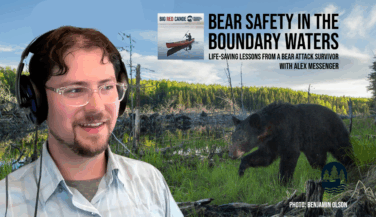
Podcast: Bear Safety in the Boundary Waters
Proper food storage and bear-aware camping practices aren’t just recommendations—they’re life-saving skills that every Boundary Waters visitor needs to master.